


2025 Transit® near Burton, OH
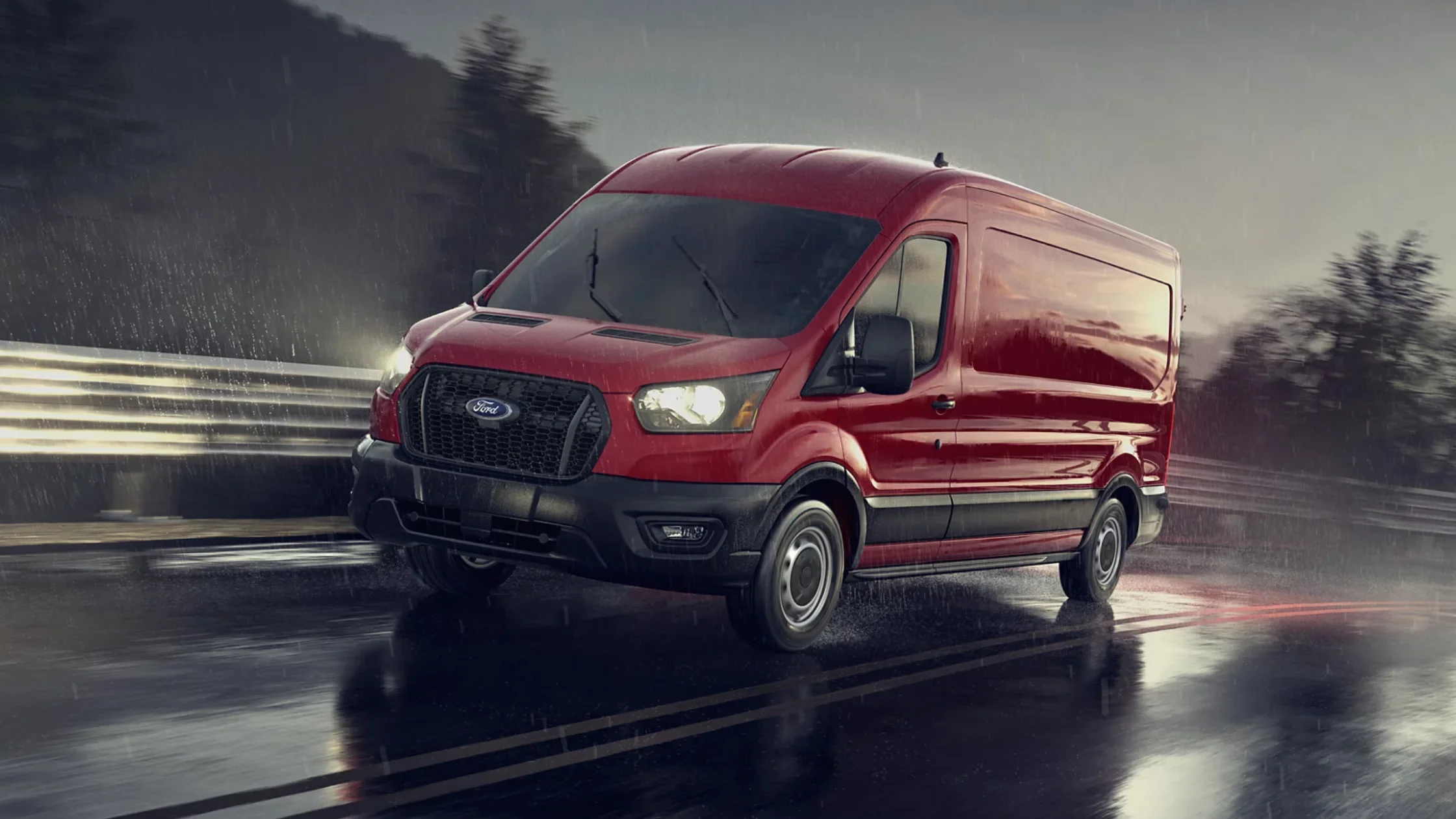
The 2025 Ford Transit® has been designed to support the needs of commercial transport, cargo logistics, and multi-passenger configurations. With two engine options, advanced drivetrain technologies, variable roof heights, and modular cargo capacity, the vehicle prioritizes functionality and adaptability. Each component contributes to a platform that accommodates high-utility operations with efficiency and precision. The model also offers a range of integrated features engineered to support towing, safety monitoring, and digital connectivity.
Engine Architecture and Mechanical Configuration
The 2025 Ford Transit® offers two engine types to meet different load and drive profile requirements. The standard 3.5L Port Fuel Direct Injection (PFDi) V6 engine produces 275 horsepower and 260 pound-feet of torque.
An optional 3.5L EcoBoost® V6 engine is also available, generating 310 horsepower and 400 pound-feet of torque. The EcoBoost® V6 uses turbocharging technology to increase efficiency without requiring additional displacement.
Both engines can be paired with an available 31-gallon fuel tank. This tank allows for extended range and fewer interruptions for refueling.
The 2025 Ford Transit® also offers Intelligent All-Wheel Drive (AWD). This system adjusts torque distribution to improve traction and control across varying driving surfaces. The integration of AWD does not affect the interior floor height or seat configuration, maintaining the functional interior layout without structural compromises.
Hauling and Towing Integration
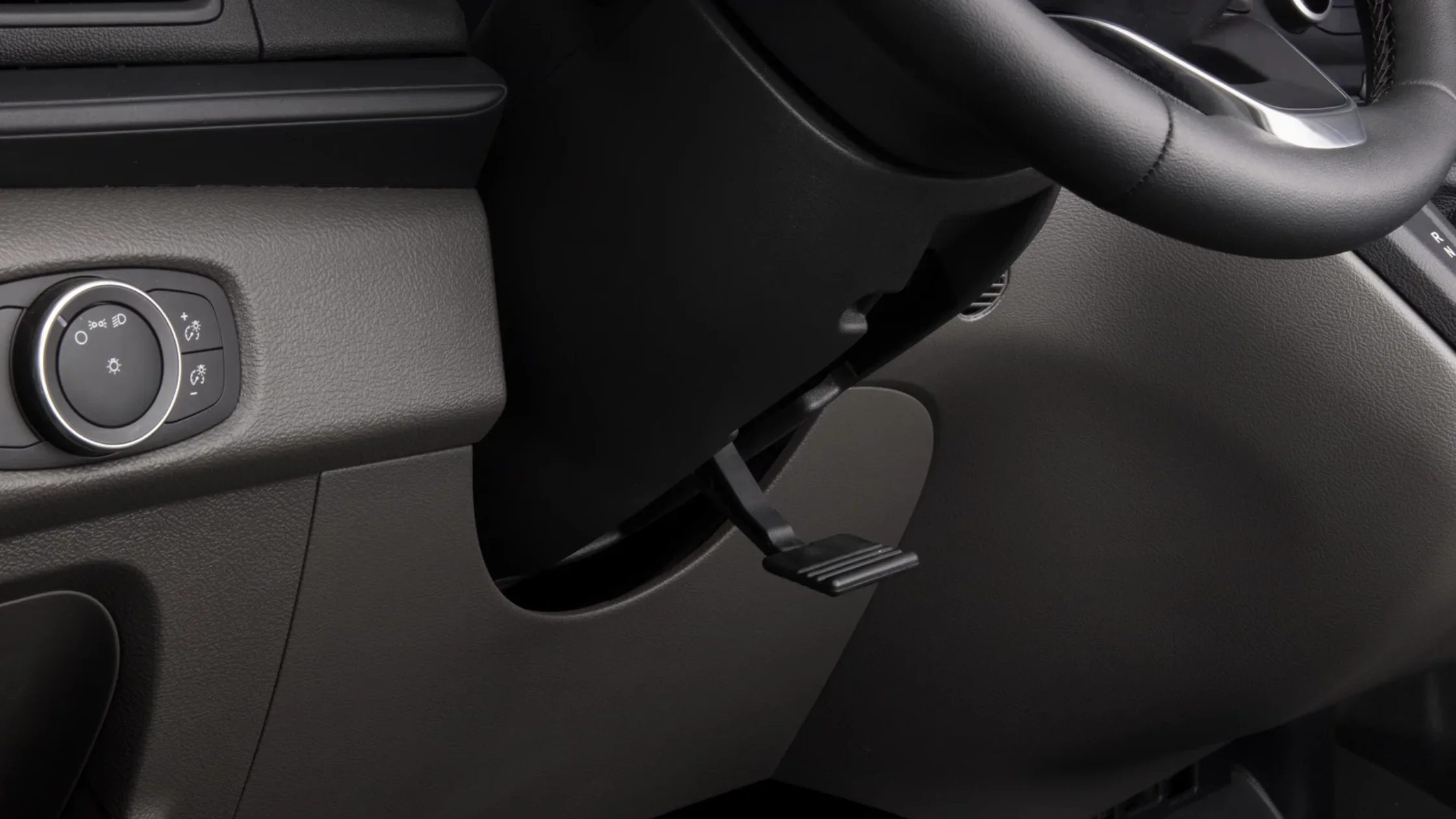
The 2025 Ford Transit® supports a maximum towing capacity of 4,500 pounds when properly equipped. Operators can use the Heavy-Duty Trailer Tow Package, which includes wiring provisions, a frame-mounted hitch receiver, a connector assembly, and rear jumpers.
Several active systems support towing stability and awareness. Trailer Sway Control uses AdvanceTrac® with Roll Stability Control™ to manage trailer motion. By adjusting braking and engine output, this system corrects lateral trailer movement to prevent loss of control. Trailer Coverage operates with the vehicle’s blind spot monitoring system, extending its range to include the length of an attached trailer.
Trailer Hitch Assist™ works with the rear-view camera and display interface. It helps guide the van in reverse to align the hitch with a trailer using directional overlays. This system removes the need for a secondary observer and improves alignment accuracy. The towing setup also benefits from Post-Collision Braking, which applies controlled deceleration after a collision is detected to minimize secondary impact severity.
Configurable Cargo and Body Dimensions
The 2025 Ford Transit® provides three roof height options and two body lengths to configure space according to equipment or passenger requirements. Roof height selections include low, medium, and high, each offering a distinct maximum cargo height. The low roof variant stands at 82.4 inches exterior height with an internal maximum cargo height of 52.8 inches.
The medium roof version increases exterior height to 99.2 inches with 67.6 inches of cargo height inside. This configuration accommodates taller equipment or mobility-related installations while keeping the overall vehicle size manageable. The high roof reaches an exterior height of 108.6 inches and provides 77 inches of cargo height.
In terms of length, the long body version measures 235.5 inches and provides 349.6 cubic feet of cargo volume behind the first row. The extended body increases exterior length to 263.9 inches with a total cargo capacity of 425.4 cubic feet. The van also supports a maximum payload of 3,475 pounds, offering flexibility for heavy cargo or combined passenger and equipment transport.
Interior Structure and Capacity Design
The interior of the 2025 Ford Transit® can be configured to seat between two and fifteen passengers. The seating layout is adjustable to suit commercial or shuttle-type operations. The driver and front passenger seats are available with 10-way power adjustment and heating capability.
Storage and cargo area accessories are available for secure transport. The van’s rear door configuration includes a 50/50 hinged setup, supporting wide access for large items or group entry.
Digital Systems and Operational Interfaces
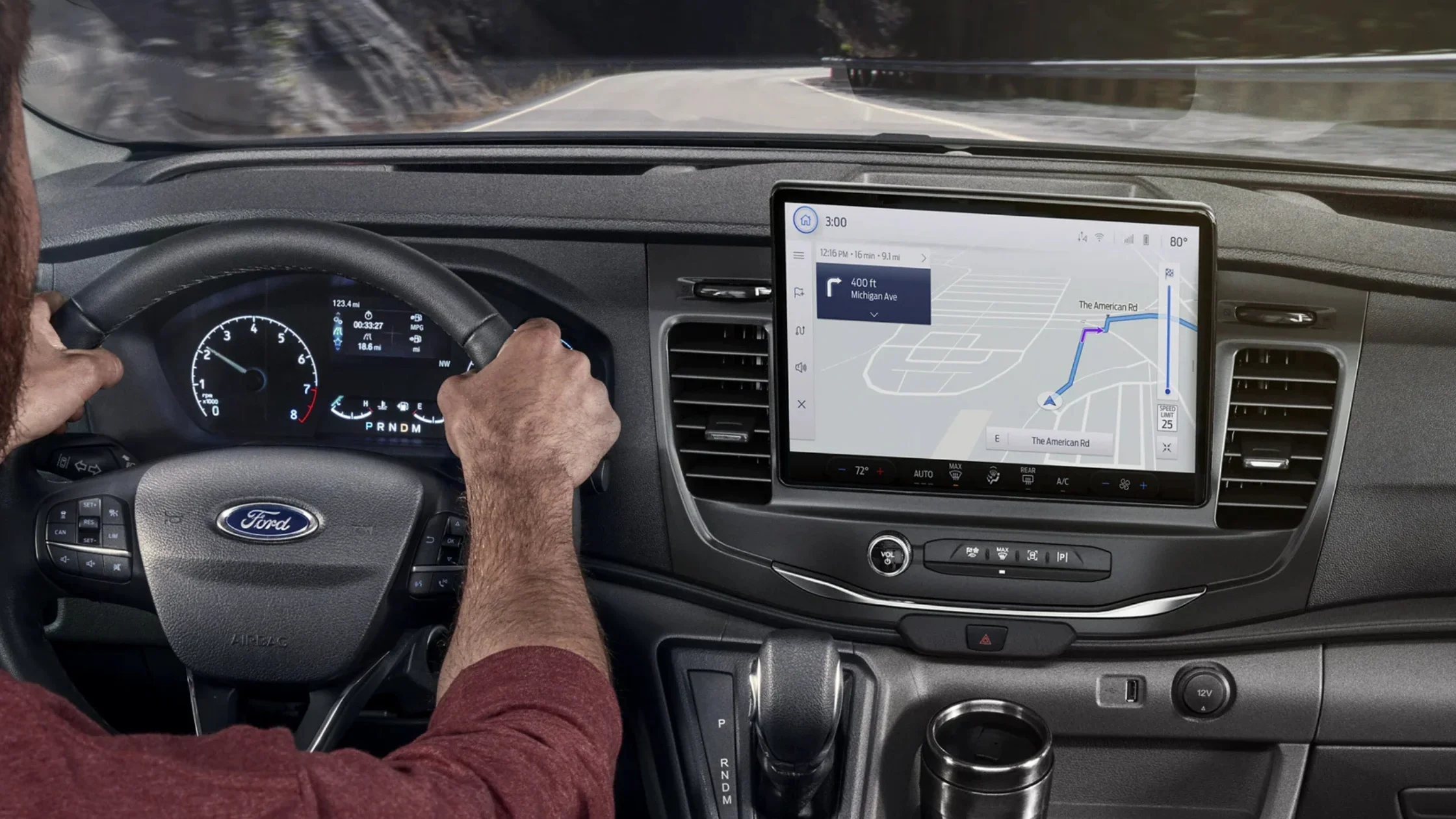
The 2025 Ford Transit® integrates a range of in-vehicle systems to support driver control, navigation, and communication. The standard SYNC® 4 system (available in the XLT trim) operates through a 12-inch display and offers wireless connectivity for Apple CarPlay® and Android Auto™. This system supports hands-free calling, message handling, music streaming, and map access. Software updates are conducted wirelessly, maintaining system performance without the need for manual downloads.
Voice recognition allows the driver to execute commands and retrieve information while maintaining attention on the road. The interface recognizes commonly used phrases and adapts to different speech patterns to improve command accuracy.
Connected Navigation remains functional in areas with weak cellular signal and offers weather conditions, route traffic status, parking availability, and point-of-interest data. This function is beneficial for delivery routes or fleet services in unfamiliar locations. Alexa Built-in is also available through Ford Premium Connectivity. This system provides task management, music selection, and location data using voice commands.
A premium eight-speaker audio system is included to enhance audio clarity across the vehicle cabin. This supports communication in larger passenger configurations and improves clarity for turn-by-turn navigation instructions.
Driver Assistance and Monitoring Systems
The 2025 Ford Transit® is equipped with multiple active systems designed to assist with driver awareness, speed management, and collision avoidance. The Lane-Keeping System monitors road markings and alerts the driver if the vehicle drifts unintentionally. If repeated lane departure behavior is detected, a visual reminder prompts the driver to consider rest.
Pre-Collision Assist® with Automatic Emergency Braking (AEB) uses radar and sensors to detect possible forward collisions with other vehicles or pedestrians. The system issues visual and audible alerts and applies braking force automatically if the driver does not respond.
Adaptive Cruise Control maintains a preselected speed and following distance from the vehicle ahead. It adjusts acceleration and braking to match traffic flow without requiring manual input.
Blind Spot Assist notifies the driver of adjacent vehicles during lane changes or merging actions. The system also includes Cross-Traffic Alert, which activates during reverse maneuvers to detect moving traffic behind the vehicle. Enhanced Active Park Assist controls the steering during parallel parking. The driver manages gear selection and braking while the system handles wheel alignment.
A 360-degree camera is available to provide a composite overhead view of the vehicle and surrounding area. This function aids with tight turns and precise positioning in confined loading zones. The rear-view camera remains active at speeds up to six miles per hour and includes guiding lines for directional assistance.
Rear parking sensors emit audio signals to inform the driver of obstacles near the rear bumper during reverse operations. Rain-sensing windshield wipers activate automatically when moisture is detected on the glass, maintaining clear visibility during changing weather.
Visit Nick Mayer Ford Mayfield for a Test Ride
Operators who require a vehicle that prioritizes configurable space, engine adaptability, and integrated safety technology can experience the 2025 Ford Transit® firsthand. At Nick Mayer Ford Mayfield near Burton OH, our team is prepared to demonstrate how this van supports efficient fleet performance. Schedule a test drive to explore the vehicle’s towing capacity, digital systems, and cabin configuration in an operational context. This is a practical opportunity to assess how it matches your technical requirements and daily transportation workflows.