


2025 Ford Explorer® in Shaker Heights, OH
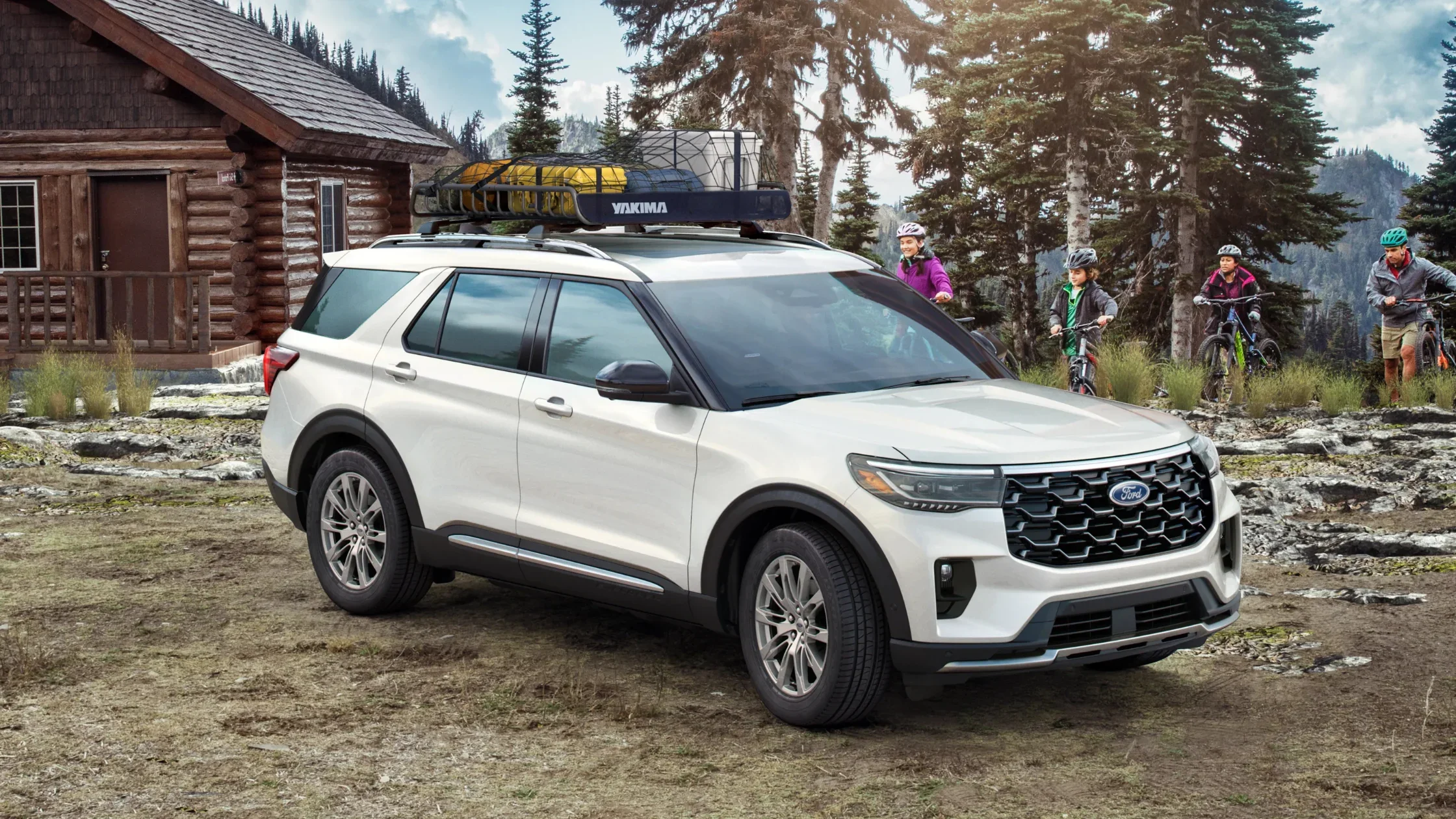
The 2025 Ford Explorer® enters the market with a redesigned structure, new technologies, and updated interior and exterior enhancements. This model continues to focus on functionality, accommodating families and individuals with practical solutions for transportation, storage, and safety. With a strong foundation in performance and adaptability, the 2025 Ford Explorer® aims to meet the evolving demands of midsize SUV drivers with precise engineering updates across the board.
Redesigned Powertrain Configuration
The 2025 Ford Explorer® comes with two engine options designed for power and efficiency. The standard powertrain is a 2.3-liter EcoBoost® inline-four engine. It produces 300 horsepower and 310 lb-ft of torque. This turbocharged engine is matched with a 10-speed automatic transmission that contributes to consistent acceleration and optimized gear shifting.
For drivers who require stronger output, a 3.0-liter EcoBoost® V6 engine is available. This twin-turbocharged powertrain delivers 400 horsepower and 415 lb-ft of torque. It is standard on performance-focused trims. This engine also connects to the same 10-speed automatic transmission, ensuring uniform performance calibration across all variants.
Both engine options are available in rear-wheel drive or all-wheel drive formats. Rear-wheel drive configurations are tuned for road handling and efficiency. All-wheel drive enhances traction in wet, snowy, or loose-surface environments.
Cabin Interface and Interior Technologies
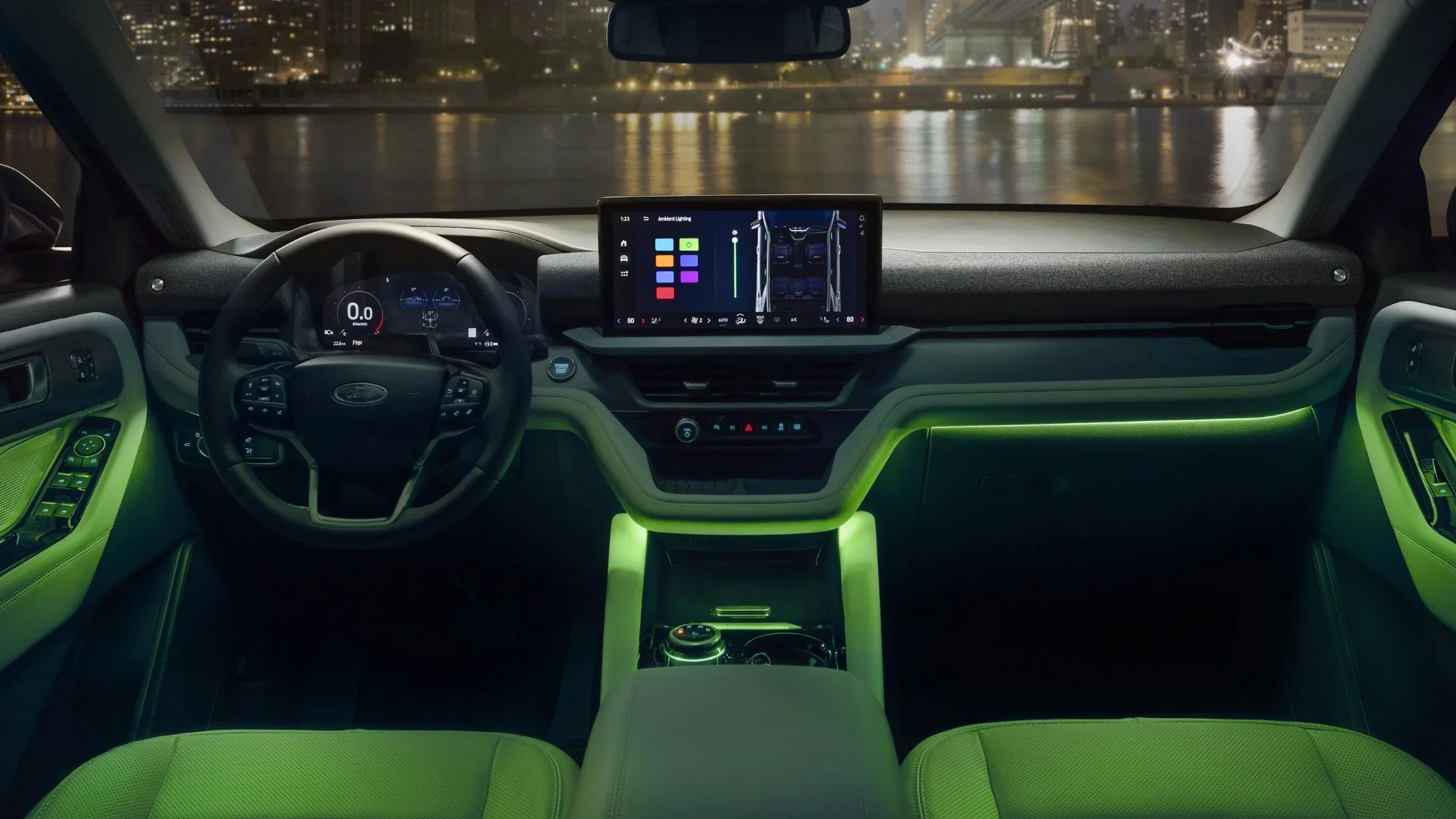
Inside the 2025 Ford Explorer®, technology integration has been overhauled. The dashboard features a 13.2-inch touchscreen system that is now powered by an Android-based operating platform called the Ford Digital Experience. The system comes preloaded with embedded Google Assistant and Google Maps. Both Apple CarPlay® and Android Auto™ are compatible through wireless connections. In front of the driver is a 12.3-inch digital instrument cluster.
The interior now features more streamlined climate control inputs, shifting from physical buttons to capacitive touch controls. Ventilation and temperature adjustments are available for front-row seating, and cabin airflow has been optimized through newly positioned vents for rear passengers.
Seat capacity options range from six to seven depending on trim selection. Captain’s chairs are available for the second row. These chairs offer easier access to the third row and additional space for passengers. Trims also provide varying materials, including cloth and upgraded leather, but all seat configurations are designed with support and durability as the main focus.
Structural and Exterior Modifications
The exterior design has been revised to align with Ford’s current design language. At the front, the new grille features a more rectangular shape with horizontal crossbars. Headlamps have transitioned to a full LED system with updated housing and signature daytime lighting.
The rear end of the vehicle includes revised taillamps that match the front’s LED setup. These lights span more of the liftgate area than the previous design. The liftgate itself has been modified with improved contours and integrated components to reduce part lines and enhance overall aerodynamics.
Trim-dependent wheels are offered, with upper trims featuring 21-inch alloy wheels in darker finishes. These wheels support both aesthetics and handling through reduced weight and improved tire width. Side profile accents include subtle chrome deletes or black finishes, depending on the package selected. Ground clearance remains consistent with prior model years, supporting both urban and mild off-road use.
Cargo and Storage Functionality
Behind the third row of seating, the 2025 Ford Explorer® offers 18.2 cubic feet of cargo space. Folding the third row increases this area significantly. A flat load floor design provides stability for transporting larger items. Tie-down hooks and underfloor compartments further expand storage solutions for drivers who need flexibility for work or travel.
The 2025 Ford Explorer® supports towing requirements through factory-installed towing hardware on certain trims. When properly configured, the vehicle can pull up to 5,000 pounds. Trailer sway control is integrated into the vehicle’s systems and works in conjunction with the onboard traction and braking systems to maintain control during towing operations.
The cabin features multiple storage zones, including a deep center console bin, side door pockets, and a rear under-cargo compartment. Cup holders and small electronics compartments are included in all rows. These allow passengers to keep devices and items secured during movement.
Safety and Driver-Assist Systems
The 2025 Ford Explorer® includes Ford’s Co-Pilot360® Assist+ package across most trims. This suite includes a range of features designed to prevent collisions and support the driver in traffic.
The Pre-Collision Assist system uses forward-facing sensors to identify obstacles. It works with automatic emergency braking to reduce the chance of a front-end crash. Blind Spot Information System (BLIS®) monitors vehicle activity on both sides and alerts the driver through side mirror indicators. Cross-Traffic Alert extends this monitoring when reversing.
Adaptive Cruise Control is combined with Stop-and-Go functionality and Lane Centering. These systems are used on longer highway drives to maintain a set speed and distance from vehicles ahead while keeping the 2025 Ford Explorer® centered in its lane.
A Lane-Keeping System also intervenes in situations where the driver inadvertently crosses over lane markings. The rear of the cabin is protected by Ford’s Safety Canopy® System, which provides side-curtain airbag coverage across all three rows in the event of a side collision or rollover event.
Auto high-beam headlamps adjust light output based on ambient conditions and oncoming traffic.
Infotainment and Connectivity Expansion

In addition to native navigation and voice control systems, the Ford Digital Experience allows for over-the-air updates. Music and audio functions are controlled via touchscreen or steering-wheel-mounted buttons.
The vehicle is also compatible with available in-vehicle Wi-Fi hotspot services. Multiple USB ports are spread across the cabin to charge devices or connect to the media system. A wireless charging pad is available in select trims and placed in the front console area for accessibility.
Driver profiles can be stored digitally, allowing multiple users to retain seat positioning, display settings, and infotainment preferences. The 2025 Ford Explorer® can automatically adjust based on the registered key fob or connected smartphone, minimizing the need for manual adjustments between drivers.
Structural Platform and Chassis Performance
The 2025 Ford Explorer® maintains its use of a rear-wheel-drive-based platform. This design offers improved balance and weight distribution, particularly when towing or carrying heavier loads. The chassis is engineered with high-strength steel to improve rigidity while keeping overall weight within efficient parameters.
Suspension systems differ by trim. Standard trims use a comfort-tuned setup, while performance-oriented trims include sport-tuned suspension components that are calibrated for sharper response and reduced body roll. Braking systems include four-wheel disc brakes with anti-lock braking and electronic brake-force distribution.
Steering is electric power-assisted and varies boost levels depending on vehicle speed. This helps improve maneuverability at lower speeds and stability at highway speeds. The turning radius is optimized for its class, assisting in urban and suburban navigation.